

Which Country Is Best for MBA? The Definitive Answer for Indian Applicants
After guiding 2,700+ applicants into MBA programs across 18+ countries, I can tell you this: the question “which country is best for mba” is the wrong question. The right question is “which country is best for MY MBA, given my career goals, financial situation, and life plan.” Because the answer changes dramatically depending on whether you want MBB consulting in New York, product management in London, entrepreneurship in Singapore, or a permanent move to Canada.
I’ve had clients choose the US over the UK and regret it. I’ve had clients choose Europe over the US and thrive. The patterns are consistent, but only when you match the country to your specific goals. This isn’t a ranking question – it’s a fit question. And I’m going to walk you through exactly how to think about it.
Which Country Is Best for MBA for Indian Students?
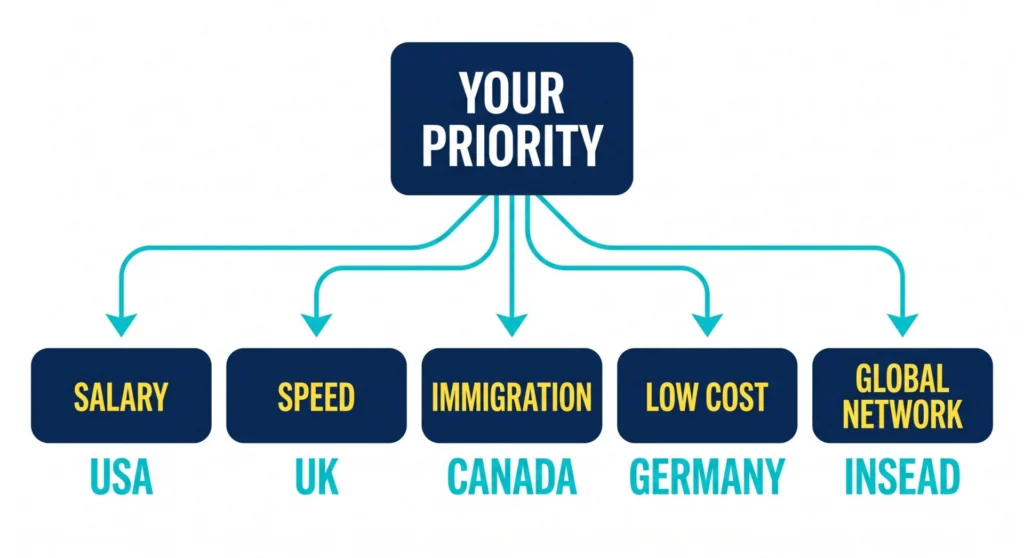
Let me answer the core question directly: which country is best for mba for indian students? For most Indian professionals targeting high-salary careers in consulting, finance, or tech – the United States remains the strongest option. But “best” is misleading if it ignores your specific constraints. Here’s how I break down which country is best for mba for indian students based on what they’re actually optimizing for.
If you’re optimizing for salary ceiling: USA. No contest. Post-MBA salaries at M7 and T15 US schools start at $150,000-$175,000 base, plus signing bonuses of $25,000-$35,000. No other country comes close in absolute compensation.
If you’re optimizing for speed + ROI: UK. One-year programs at LBS, Oxford Said, Cambridge Judge, and Imperial mean you’re back earning 12 months sooner. Total cost (tuition + living) runs ₹35-55 lakhs for top programs. The 2-year Graduate Route visa gives you time to find work.
If you’re optimizing for immigration: Canada. The Post-Graduation Work Permit (PGWP) gives you up to 3 years of open work rights, and the pathway to PR is the most straightforward of any MBA destination. Rotman, Ivey, and Schulich are strong programs with good employment outcomes for Indians.
If you’re optimizing for low cost: Germany or France. Near-zero tuition at German public universities. French programs like HEC MBA offer generous scholarships.
If you’re optimizing for global network: INSEAD (France/Singapore) or LBS (UK). These programs have the most internationally diverse classes – 90%+ international students, 70+ nationalities. If your career plan involves working across multiple countries, these schools create the network for it.
I also want to add something here that most guides won’t tell you. The “best” country for your MBA can change based on your age and family situation. A 25-year-old single engineer optimizing for salary should target the US. A 31-year-old married professional with a working spouse might get better total household outcomes from Canada (where spouses get open work permits) or the UK (where dependent visa holders can work). The country decision isn’t just about your career – it’s about your life architecture.
Best Country for MBA 2026: What's Changed
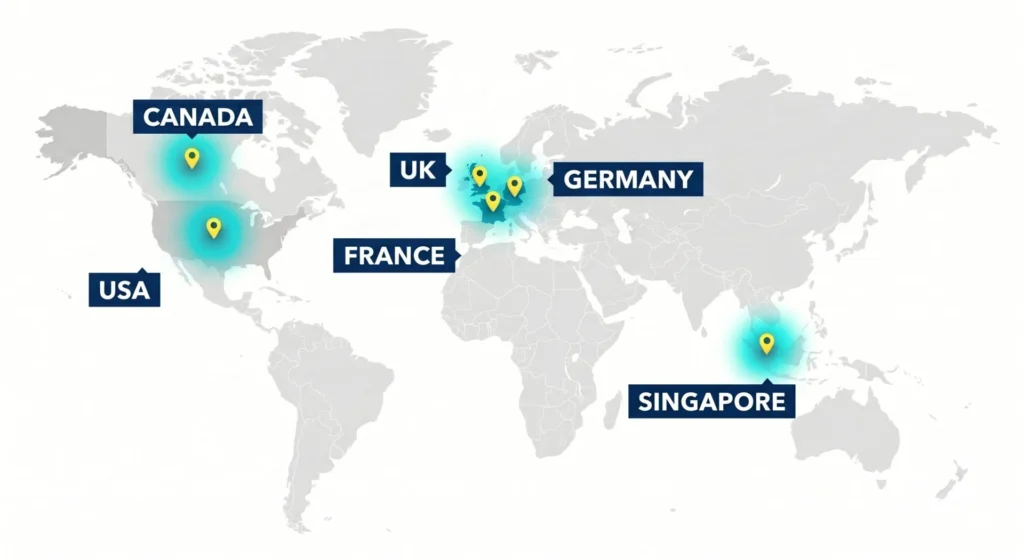
The best country for mba 2026 looks different from even 2-3 years ago. Several shifts have reshaped the picture for Indian applicants, and if you’re planning based on outdated information, you’ll make the wrong choice. Here’s what’s changed for best country for mba 2026.
USA: Still #1 for career outcomes, but H-1B uncertainty continues. The lottery system means even with a job offer from McKinsey or Google, visa sponsorship isn’t guaranteed on the first attempt. Most top employers file for you, and OPT gives you 1-3 years to work while you wait. But the immigration path to permanent residency for Indians is decades long. The career opportunity is unmatched; the immigration security is not.
UK: The Graduate Route visa (2 years post-study work rights) has made the UK significantly more attractive than it was pre-2021. London’s finance and consulting sectors actively recruit from top UK MBA programs. The constraint: UK salaries are lower than US salaries (GBP 65,000-85,000 starting vs. $150,000+ in the US).
Canada: The strongest immigration pathway, but the job market has tightened. Competition for roles in Toronto and Vancouver has increased. MBA graduates still have strong outcomes, but the “easy path to PR” narrative needs to be balanced with realistic job market expectations.
Europe: Germany’s zero-tuition model remains attractive but with a narrower job market for Indians. France, Spain, and the Netherlands are growing MBA hubs with improving post-study work rights. INSEAD continues to be the gold standard for European MBA.
Singapore and Asia-Pacific: INSEAD’s Singapore campus and NUS MBA have grown in stature as more Indian applicants target Asia-Pacific leadership roles. Singapore’s Employment Pass system is straightforward for MBA graduates, and the city-state’s position as a hub for Southeast Asian business makes it attractive for Indians who want regional leadership without the visa uncertainty of the US. The trade-off: the MBA job market in Singapore is smaller than London or New York, and roles tend to be concentrated in financial services and consulting.
Here’s the pattern I’ve seen for best country for mba 2026: Indian applicants who used to default to the US are now splitting into two camps. The salary-maximizers still go to the US – and should. But the quality-of-life optimizers are increasingly choosing Canada, UK, and Singapore, where the immigration pathway is clearer, the total cost is lower, and the career outcomes – while not matching US peaks – are strong enough to deliver excellent ROI. This split didn’t exist five years ago. It’s the defining trend of 2026.
Top Countries for MBA Abroad: The Country-by-Country Comparison
Here’s my honest comparison of the top countries for mba abroad. I’ve been guiding Indian applicants into programs across all these destinations for 19 years, and these are the patterns that hold true consistently. Every one of these top countries for mba abroad has its strengths and trade-offs.
Country | Top Programs | Duration | Total Cost | Starting Salary | Work Visa | PR Path |
USA | M7, T15, T25 | 2 years | ₹1.5-2.5 Cr | $150-175K | OPT + H-1B | Very long for Indians |
UK | LBS, Oxford, Cambridge | 1 year | ₹35-55L | GBP 65-85K | Graduate Route 2yr | Difficult |
Canada | Rotman, Ivey, Schulich | 1-2 years | ₹30-50L | CAD 80-110K | PGWP 3 years | Strong pathway |
France | INSEAD, HEC | 1-1.5 years | ₹25-60L | EUR 70-100K | 1-year post-study | Moderate |
Germany | Mannheim, ESMT | 1-2 years | ₹10-20L | EUR 55-75K | 18-month job seeker | Possible |
Singapore | INSEAD, NUS | 1-1.5 years | ₹40-70L | SGD 100-130K | Employment Pass | Possible |
A few things that table doesn’t capture but that matter enormously. The US has by far the deepest recruiting infrastructure – MBA career fairs at top US schools attract 200+ employers per event. No other country comes close. When Indian applicants ask me about top countries for mba abroad, I tell them that the US advantage isn’t just salary – it’s the sheer volume of employers competing for MBA talent on campus. That competition drives up starting offers and creates negotiating power you simply don’t have in smaller MBA markets.
The UK’s advantage is concentration. London puts you within walking distance of every major consulting firm, every investment bank, and a growing tech sector. You don’t need a car, you don’t need to fly to interviews, and your networking can happen over a coffee rather than a cross-country trip. For Indians who value efficiency and speed, the UK’s one-year format combined with London’s density is hard to beat.
Canada’s advantage is stability. The PGWP gives you breathing room that no other country’s visa system offers. Three years of unrestricted work rights means you can take a slightly lower starting salary in exchange for long-term career building and PR eligibility. For Indians prioritizing permanent settlement, the top countries for mba abroad list starts and ends with Canada.
Best Country for MBA After BTech: The Indian Engineer's Guide
If you’re an Indian engineer asking which is the best country for mba after btech, the answer depends heavily on your work experience. The best country for mba after btech changes based on whether you have 0, 2-3, or 5+ years of post-graduation experience.
With 0-1 years after BTech: France or UK for a Masters in Management (MiM), not an MBA.
A MiM at HEC Paris or LBS is a far better investment than forcing yourself into an MBA program that accepts freshers.
With 2-3 years after BTech: USA (T15-T25 schools) or UK. You have enough experience to make an MBA meaningful, and both countries have strong placement for engineers transitioning to consulting, product management, or tech strategy. The key is demonstrating impact in those 2-3 years, not just tenure.
With 4-5+ years after BTech: USA (M7-T15) or INSEAD. This is where the full-strength MBA experience makes sense. You have enough context to contribute to peer learning, and the career switch opportunities are maximized. Most Indian IT engineers I work with fall in this bracket.
Here’s a pattern I’ve seen play out hundreds of times with Indian engineers. Applicants from TCS, Infosys, Wipro, and Cognizant with 4-5 years of experience tend to get the strongest outcomes from US T15-T25 programs – not because the US is inherently better, but because US schools have the deepest experience working with Indian IT profiles and know how to evaluate the impact behind the technical jargon. These schools understand what ‘led a team of 12 on a $3M migration project for a Fortune 500 client’ actually means. UK and European schools sometimes undervalue Indian IT experience because their admissions committees don’t have the same context for interpreting it.
On the other hand, engineers with 2-3 years of experience – especially those from product-focused companies like Flipkart, Swiggy, or early-stage startups – often do exceptionally well at UK programs like LBS or Oxford Said. Why? Because the one-year format means less time away from a fast-moving career, and the class composition at these schools values entrepreneurial energy over years of tenure. I’ve also noticed that engineers targeting product management tend to favour US West Coast-friendly schools (Haas, Sloan, Ross) while those targeting consulting lean towards East Coast and Midwest programs (Kellogg, Booth, Darden). The country choice is really a career-path choice in disguise.
Best Country for MBA and PR: Where Immigration Works for Indians
For Indian applicants where immigration is a primary goal, the question of best country for mba and pr has a clear answer: Canada. Let me explain why the best country for mba and pr conversation always comes back to Canada, while also flagging the options in other countries.
Canada: The Post-Graduation Work Permit (PGWP) gives you up to 3 years to work after graduation. You can apply for Express Entry PR while working. The Comprehensive Ranking System (CRS) awards points for Canadian education and work experience, giving MBA graduates a significant advantage. Of all the countries I advise on, Canada has the most predictable immigration pathway.
Germany: An 18-month job seeker visa after graduation, and after 2 years of work, you can apply for permanent settlement. The EU Blue Card is another route for skilled professionals. The trade-off: German language skills significantly improve your job prospects, and the MBA job market for Indians is narrower than in the US or UK.
Australia and New Zealand: Both offer generous post-study work visas (2-4 years) and points-based PR systems that favour young, educated professionals. Melbourne Business School and AGSM in Sydney are solid options. The MBA programs aren’t as globally recognized as US/UK schools, but the immigration trade-off is real.
USA: The elephant in the room. The best career outcomes but the worst PR pathway for Indians. The EB-2/EB-3 green card backlog for Indian nationals stretches decades. You can build a brilliant career on H-1B, but calling it a path to PR would be misleading.
Here’s my honest advice on best country for mba and pr. If permanent settlement is your top priority – above salary, above brand name, above career ceiling – choose Canada. If career quality is your top priority and you’re comfortable with long-term visa uncertainty, choose the US. If you want a middle ground – decent career outcomes with a reasonable (not guaranteed) immigration path – Germany and Australia are worth serious consideration.
What I tell every PythaGURUS client is this: don’t make immigration your only variable. I’ve seen applicants choose weak MBA programs in Canada purely for PR, only to struggle with the job market and end up in roles that don’t justify the MBA investment. And I’ve seen applicants choose the US, build incredible careers on H-1B for 10+ years, and find alternative immigration pathways through EB-1 or company-sponsored green cards. The best country for mba and pr is the one where you can build a career strong enough that immigration becomes a solvable problem, not a career-defining constraint.
Cheapest Country for MBA and Best Country for MBA Low Cost
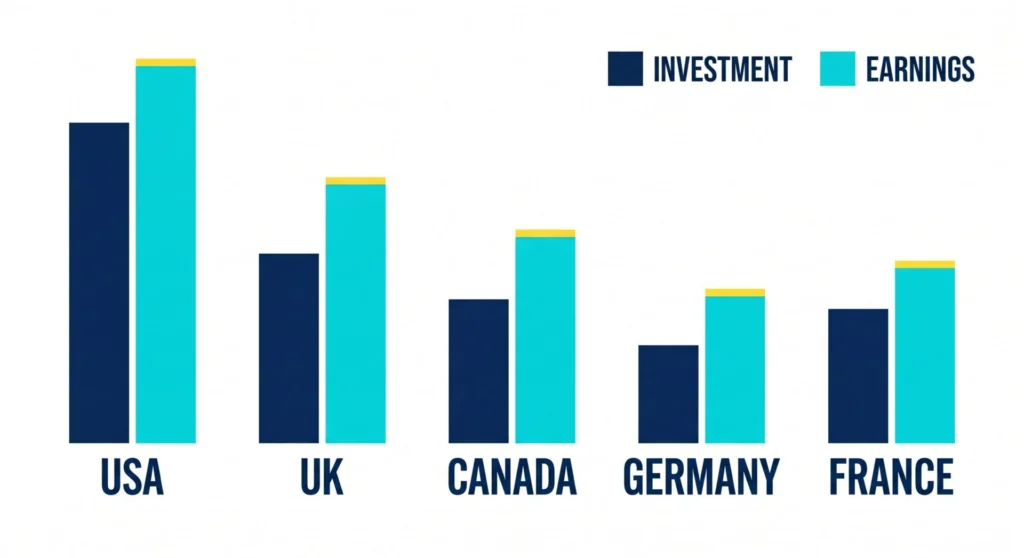
If budget is your primary constraint, the cheapest country for mba is Germany – and it’s also a strong contender for best country for mba low cost overall. But “cheapest” and “best value” are different things. Let me walk you through both the cheapest country for mba options and the best country for mba low cost destinations that actually deliver strong ROI.
Germany (₹10-20 lakhs total): Near-zero tuition at public universities. Living costs in Berlin or Munich run ₹5-8 lakhs per year. Mannheim, ESMT Berlin, and WHU offer reputable MBA programs. The catch: recruiting networks are Germany-focused, and career outcomes for Indians are narrower than US or UK programs.
France (₹25-40 lakhs total): HEC Paris, ESSEC, and EDHEC offer competitive tuition with generous scholarships. One-year formats reduce living costs. France’s post-study work visa allows you to stay and work.
Spain (₹20-35 lakhs total): IE Business School, ESADE, and IESE in Barcelona/Madrid. Cost is moderate, quality is strong, but post-MBA placement for Indians returning to South Asia is the strongest use case. EU work rights help if you want to stay in Europe.
Canada (₹30-50 lakhs total): Moderately priced with strong immigration upside. The best country for mba low cost when you factor in the PR pathway – because permanent settlement eliminates the need to “maximize salary in 3 years before your visa expires.”
I also want to add something here about the hidden costs that most “cheapest country for MBA” lists ignore. Tuition is only part of the picture. Living costs in London can add ₹20-25 lakhs to a UK MBA. Living in New York or San Francisco adds ₹30-40 lakhs to a US MBA. But living in Berlin adds only ₹10-12 lakhs. And living in Montreal or Toronto adds ₹15-20 lakhs. When you factor in total cost of attendance – not just tuition – the ranking of cheapest country for mba shifts significantly.
And then there’s the opportunity cost variable. A one-year UK MBA means you’re earning again 12 months sooner than a two-year US MBA. For someone earning ₹25 lakhs, that’s ₹25 lakhs in recovered income plus whatever post-MBA salary you earn in that second year. When you run the full math – tuition, living costs, opportunity cost, and post-MBA earning potential – the best country for mba low cost isn’t always the one with the lowest sticker price. It’s the one with the fastest payback period for your specific profile.
Best Country for MBA with Job Opportunities: Where Hiring Favours Indians
The best country for mba with job opportunities for Indian graduates isn’t just about which country has the most jobs. It’s about which country has the most jobs that sponsor international students. And that distinction changes everything when evaluating the best country for mba with job opportunities.
USA: The largest MBA recruiting market in the world. MBB consulting firms, FAANG tech companies, investment banks, and Fortune 500 corporates all recruit heavily from top MBA programs. The OPT program gives you 1-3 years of work authorization (3 years for STEM-designated MBA programs). The constraint is H-1B sponsorship beyond OPT – but most top employers will file for you.
UK: London’s financial services sector, consulting firms, and tech companies actively recruit MBA graduates. The Graduate Route visa gives you 2 years to work without sponsorship. After that, you’ll need employer-sponsored visa. The job market is smaller than the US but concentrated in high-paying sectors.
Singapore: An underrated option for Indians targeting Asia-Pacific roles. INSEAD’s Singapore campus and NUS MBA place well into regional leadership roles across Southeast Asia. The city-state’s Employment Pass system is straightforward for MBA graduates.
The whole idea is this: don’t pick a country based on its overall job market. Pick it based on whether employers in YOUR target industry actively recruit from MBA programs there and sponsor international graduates. A booming economy means nothing if the hiring isn’t accessible to you as an international student.
Here’s what 19 years of data tells me about which countries deliver the strongest employment outcomes for Indian MBA graduates, broken down by target industry. For management consulting (MBB + Big 4), US schools dominate – period. McKinsey, BCG, and Bain recruit most heavily from US campuses, and the summer internship model in the 2-year US format is your primary conversion pathway into consulting. For investment banking and finance, the US and UK split the advantage – Wall Street recruits from US programs, while London’s financial district pulls from LBS, Oxford, and Cambridge. For tech product management, US schools with West Coast connections win: Haas, Ross, Sloan, and Tepper send the most Indians into PM roles at Google, Amazon, Meta, and Microsoft.
For general management and operations roles, it gets more interesting. INSEAD and LBS produce the most globally mobile graduates – people who end up leading teams across Singapore, Dubai, London, and New York within 5-10 years. For Indians specifically targeting roles in Southeast Asia or the Middle East, INSEAD’s Singapore campus and NUS are underrated options. And for those who want to return to India with a global MBA, the school brand matters more than the country – a Wharton or INSEAD degree opens the same doors in Mumbai whether you studied in Philadelphia, Singapore, or Fontainebleau. The country choice matters most for your first 3-5 years post-MBA. After that, your track record takes over.
Frequently Asked Questions: Best Country for MBA
Q: Which country gives the highest ROI for an Indian MBA student?
For absolute ROI, the US wins – post-MBA salaries of $150-175K against a $120-200K investment give you a 3-5 year payback. But risk-adjusted ROI (factoring in visa uncertainty) often favours Canada or UK, where immigration security and shorter programs reduce the downside.
Q: Is it better to do a 1-year or 2-year MBA?
If you want a career switch into consulting or banking, the 2-year US format is stronger because the summer internship is your bridge to a new industry. If you’re accelerating within your current field or industry, a 1-year UK or INSEAD program delivers faster returns with less opportunity cost.
Q: Should I choose a country based on where I want to live permanently?
Yes – if immigration is important to you, weight it heavily. The best MBA program is useless if it puts you in a country where you can’t stay. Canada and Germany offer the most realistic PR pathways for Indians.
Q: Can I study MBA in one country and work in another?
Possible but harder than people think. A US MBA gives you access to US employers. A UK MBA gives you access to UK and EU employers. Cross-border placement happens but it’s the exception, not the norm. Choose the country where you want to build your career.
Find the Right Country for Your MBA
Which country is best for mba depends entirely on your career goals, financial situation, experience level, and life priorities. There is no universal answer – only the right answer for your profile.
If you want a data-backed, profile-specific recommendation on which country, which schools, and which strategy gives you the highest probability of admission with the strongest financial outcome – that’s what our Comprehensive Profile Analysis delivers. Honest, direct advice from someone who has guided 2,700+ applicants through exactly this decision.